Free condoms are not accessible anymore for LGBTQ+ groups in Jackson Heights, and they are waiting for a response from the city
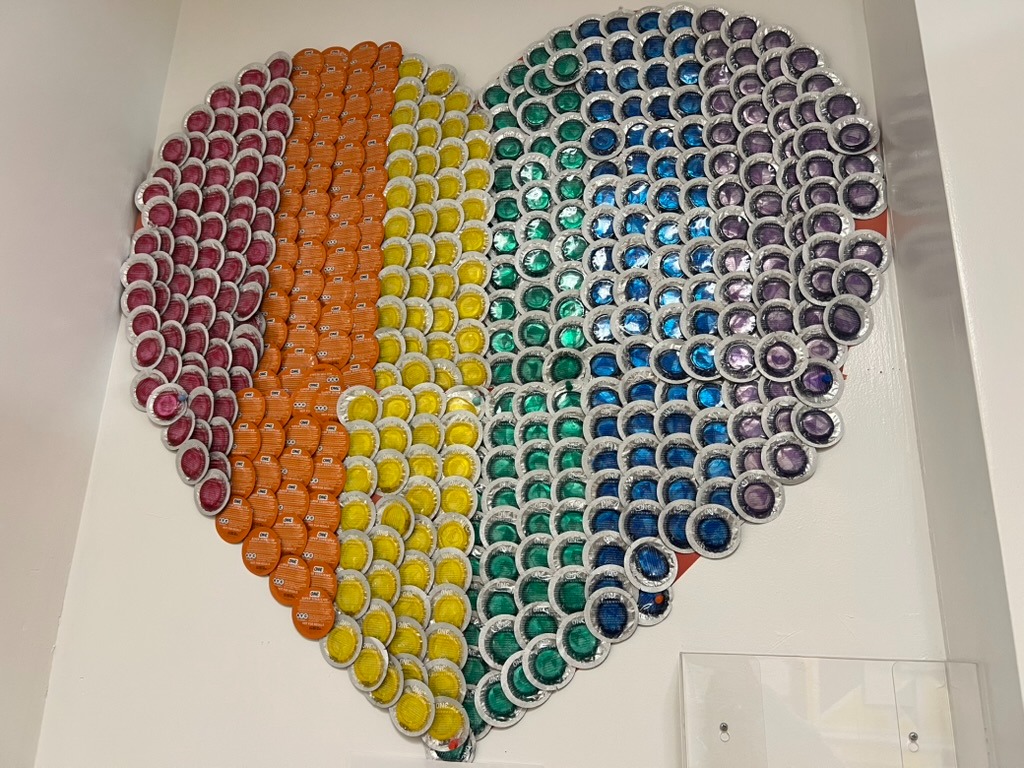
For the past two years, the city's free condom program has struggled to meet demand, leaving neighborhoods like Jackson Heights with limited supplies, especially for transgender residents and sex workers who rely on them.
New York City's Health Department introduced the NYC Condom Availability Program on Valentine's day of 2007, and has been serving the city with individual and organizational uses for about 20 years. For individuals, supplies are available across the city in locations like community food pantry, health clinic, or pharmacy.
In Manhattan, residents have the opportunity to request sexual supplies in sites on the "NYC Health Map" that the department provided. The Cathedral community cares for the Cathedral of St. John the Divine is one of the pick-up locations, where a person can ask for either condom or lubricant while getting their food supply, with a valid government-issued ID.
While the government made sure to include the five boroughs in the program, there is still a difference between each borough's site distribution. According to NYC Condom Availability's list of active venues which updates on a daily basis, Manhattan, for instance, has in total 230 locations to be ranked at the first place. This number is approximately a double compared to the 105 sites that Queens has.
At the same time, Queens' population is far more than Manhattan. 2023 U.S. Census Bureau's American Community Survey estimates that about 2.25 million residents live in Queens, while Manhattan remains about 1.6 million. With fewer sites serving a larger population, the shortfall hits hardest in immigrant and LGBTQ neighborhoods like Jackson Heights.
"The problem for the New York City department is terrible," said Liaam Winslet, CEO and co-founder of Colectivo Intercultural TRANSgrediendo, a non-profit organization working for transgender, Latinx and sex worker community in Jackson Heights.
December 1 is the annual World AIDS Day. In 2025, the NYC Department of Health holds an event to commemorate the LGBT Center in West Village. Yet, Winslet said the department "is not interested" in speaking about issues related to the condoms.
"It is difficult for sex workers right now to receive condoms, they will say that, 'I don't have money to pay for condoms, but I probably have a sex practice, use condoms'. Why does New York City have a condo for the trans community and the sex worker and the LGBT community in New York City?" Winslet said.
The organization now provides condoms to transgender sex workers on their own budget, which is about $1,000 for 300 members who regularly seek help from them.
"They used to give me a huge package every time I asked for condoms, and give it to my girls. Now they are asking me, you should give us something? But I'd tell them, It's not me. I don't have any more. They don't give us any," said Andrea Mosulini. She is a volunteer at the organization, also a transgender sex worker in the neighborhood.
"We try to get with other organizations with friends, but as far as I know, the government is not really caring about us right now, so I'm really worried, because condoms are what protect us and prevent us from getting sick," Mosulini said. "I have friends that have chlamydia, gonorrhea, which is very easy to get from someone, if you don't take the correct ways to prevent it."
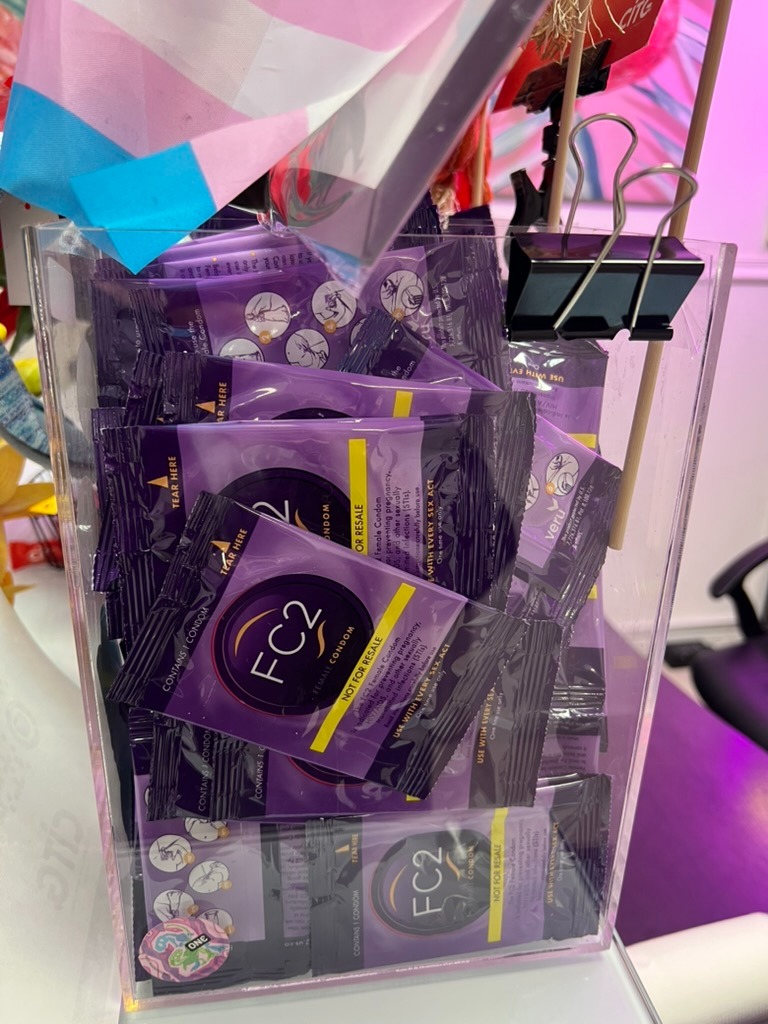
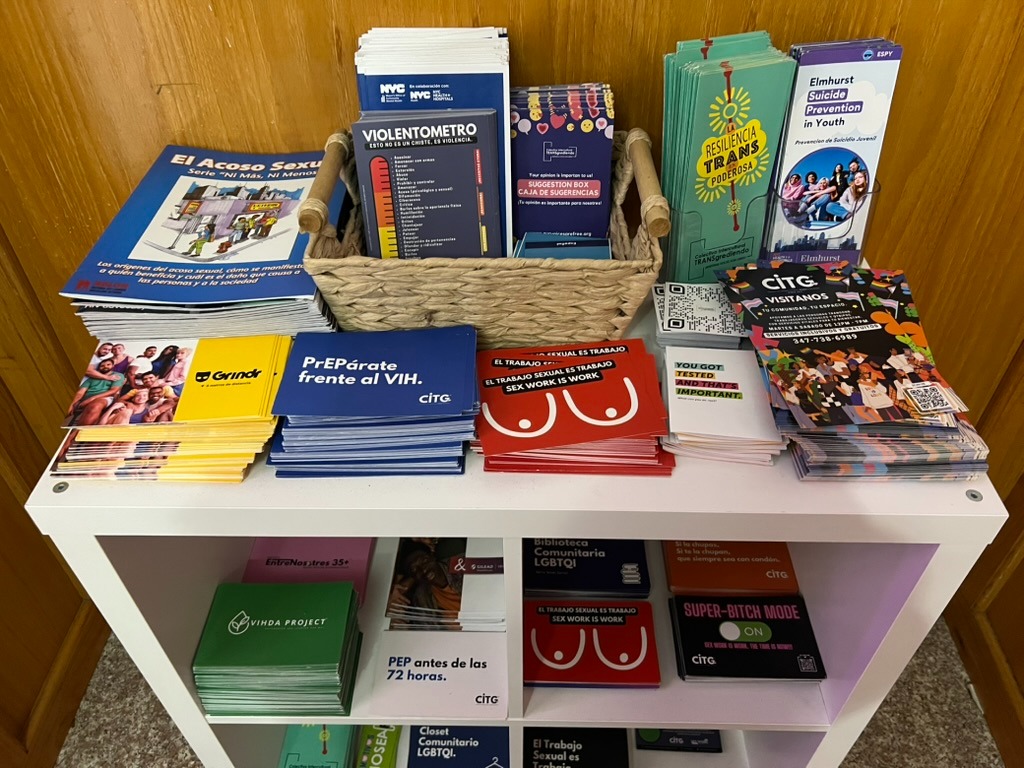
On a recent weekday afternoon, the hallway outside Colectivo Intercultural TRANSgrediendo's small Jackson Heights office filled up quickly. Trans women and other sex workers pick up food bags, hormone referrals and condoms on the office table. Winslet said usually 80-85 members show up from Wednesday to Saturday every week, either getting supplies like hot meals, or reading the HIV testing. Every Wednesday, medical staff from the local hospitals support the members and bring them the HIV testing.
For many of them, the office is one of the few places where they can ask for condoms without being turned away. Several of the distribution sites listed on the NYC Health Map require a government-issued ID, which is hard for people like Mosulini who does not have an ID to get help from.
Mosulini said that when she renewed her state ID, officials sent it back with the wrong gender marker and her old photo. On paper, she still appears as a man, despite her feminine name. She tried to fix the mistake, but after a year of calls and forms, she still has no valid ID and is afraid that going back to the DMV will only produce another incorrect card.
"I need my ID. And it feels like they do it on purpose."
— Mosulini
The lack of documents touches nearly every part of her life, not just health care or condoms. "It's Christmas and I wanted to send money to my family, but I can't because I don't have an ID," Mosulini said. "If I want to go to any club, they won't let me in either."
The struggle over condoms and IDs in Jackson Heights, Mosulini said, is only one small part of a much larger fight over whose lives are considered worth protecting.
"We all know that this person, [Trump], doesn't like us as a community," she said. "He's attacked us openly, with no shame, calling us monsters and perverts. He's taking things away from our community and from education, and education is so important for people to understand us. There are so many things being taken away."
"What I keep coming back to is how this situation pushes us down. As LGBTQ community, we really do need condoms if we're not going to get sick. And if we do, it only puts more pressure on the health system. Sometimes it feels like they don't mind that, like they almost need people to be sick to keep the hospitals running. That's the only explanation I can find," she said.
When the organization was contacted again in April, Winslet said the situation had not changed. The collective was still receiving five boxes of condoms per month and distributing between five and 10 condoms to each member, three times a week.
Winslet said the amount was still not sufficient for the number of transgender residents, sex workers and other community members seeking supplies. The organization continued buying two or three additional boxes of condoms with its own money and sharing supplies with members of the collective.
The organization also continued emailing the Department of Health about HIV prevention, transgender health and the needs of the community.
In response to questions about the shortage, the NYC Health Department said it appreciated Colectivo Intercultural TRANSgrediendo's partnership in making safer sex products available to New Yorkers.
Through the NYC Condom Availability Program, the department said it distributes free safer sex products every year to thousands of businesses, community-based organizations, health care facilities and other locations. Organizations can place orders through the NYC Safer Sex Portal and receive five boxes containing 1,000 external condoms or lubricant products per box, along with one box containing 1,000 internal condoms.
According to the department, Colectivo Intercultural TRANSgrediendo had placed five orders through the portal since January 2026. The department said it provided supplies each time the organization ordered and that the collective had received almost 30,000 safer sex products since the beginning of the year.
The department also said its records showed that the organization contacted it once in 2026, by email on January 9, and that the department responded on the same day.
The numbers provided by the city, however, do not fully reflect how quickly the supplies move through the Jackson Heights office. With hundreds of members relying on the collective and dozens arriving several days each week, the organization said the condoms must be divided into small amounts.
For Winslet and Mosulini, the question is not only whether the city has delivered condoms, but whether the amount being delivered is enough for the people who depend on them.